
Material
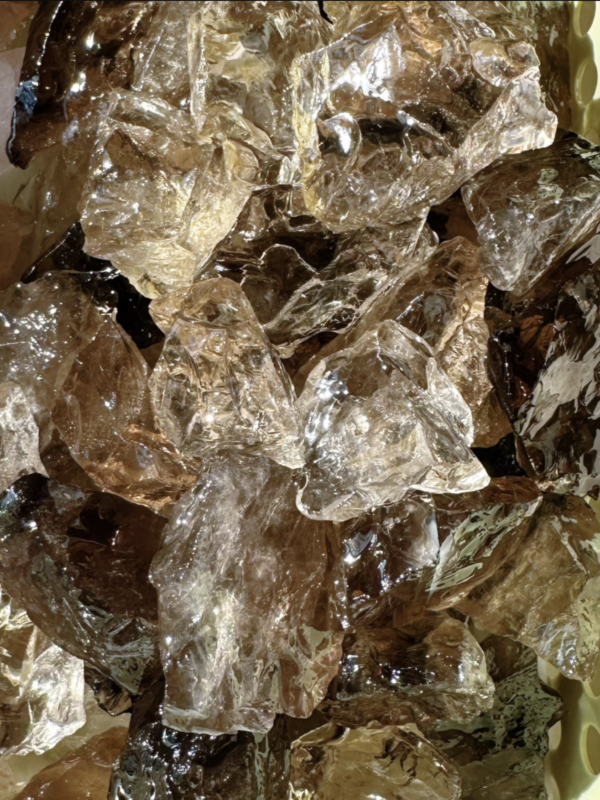
Tea Crystal is a colloquial name for Smoky Quartz — a translucent to opaque variety of crystalline quartz (SiO2) characterized by a warm brown to amber color, resembling the hue of tea or Cognac. The color ranges from light tan to deep chocolate brown, and is caused by natural gamma and/or alpha radiation interacting with trace amounts of aluminum embedded in the crystal structure. The darker the specimen, the more significant the radiation exposure during its formation deep within the earth. Tea Crystal typically forms in hexagonal prismatic crystals in granitic pegmatites and hydrothermal veins, and often occurs as large, clean crystals that can be cut into substantial gem pieces. It has a hardness of 7 on the Mohs scale, making it one of the most durable varieties of quartz and well-suited for everyday jewelry wear. Unlike some varieties of quartz, Smoky Quartz is widely available in large, clean specimens, making it one of the most accessible and affordable large gemstones on the market. Some specimens are heated or irradiated to deepen their color, though naturally dark Smoky Quartz commands a premium. The gem’s warm, earthy brown gives it a distinctive character that distinguishes it from cooler-toned stones — a color that seems to absorb light rather than reflect it, giving faceted Tea Crystal a quiet, moody depth.
Cultural Significance
Smoky Quartz has been valued across cultures for thousands of years, primarily as a stone of grounding, shade, and practical protection.
Ancient Scotland: Scotland is one of the most famous sources of Smoky Quartz in the world, with the Cairngorm Mountains producing the deep brown to smoky grey specimens known as “Cairngorm stone.” Scottish Highland clans used Smoky Quartz in clan jewelry and as a symbol of grounded authority. It was carried as a protective talisman during clan gatherings and battles.
Ancient China: While clear quartz (Crystal) was more commonly used in Chinese jade culture, brown and smoky varieties of quartz were valued in folk traditions for their connection to the earth element. Brown stones were associated with stability, practicality, and the nurturing aspect of the earth.
Indigenous Traditions of the Americas: Various Native American peoples used Smoky Quartz for grounding and centering practices. It was often used as a personal stone carried during hunts and long journeys as a way of staying connected to the earth and maintaining composure.
Celtic and Druidic Europe: In pre-Christian European traditions, Smoky Quartz was associated with the darker half of the year — the winter months when the earth is at rest. It was used in rituals that honored the cycle of rest, dormancy, and the return of light.
Modern Use: Today, Tea Crystal (Smoky Quartz) remains one of the most widely used grounding stones in crystal practice. Its warm color makes it distinctively different from black grounding stones — it carries the same energy of rootedness and stability, but with a softer, more inviting quality.
Across cultures, Smoky Quartz’s defining quality is its ability to provide grounding without heaviness — an energy of being firmly present in one’s body and in the world, without anxiety or excessive mental activity.
Energetic Qualities
Tea Crystal (Smoky Quartz) is regarded in crystal traditions as a stone of grounded calm and quiet strength. Unlike more active or stimulating stones, its energy is associated with a settling quality — the kind of presence that allows the mind to grow still and the body to relax into itself. Practitioners value it for its ability to create a sense of physical grounding: a feeling of being rooted and connected to the earth beneath one’s feet, which in turn supports mental clarity and emotional equilibrium. The warm brown color is significant — it is experienced as a particularly comforting variety of quartz, evoking the feeling of earth, wood, autumn light, and natural shelter. Many who work with Tea Crystal describe it as a stone that absorbs tension rather than reflects it — a quiet companion during stressful periods that seems to take on some of the weight so that the wearer does not have to carry it alone. It is also associated with the root chakra in energy work traditions, valued for its ability to support a sense of safety, stability, and connection to the practical realities of life. Its warmth distinguishes it from black grounding stones: where black stones can feel stark or heavy, Tea Crystal’s brown warmth is experienced as earthy and nourishing — grounding that feels like an embrace rather than a restriction.
Who It Suits
Those who tend to feel anxious, scattered, or mentally overactive and who are looking for a grounding companion to bring them back into their body
Individuals whose work is mentally demanding or who spend long hours in front of screens and who want a tangible reminder of the natural, physical world
People navigating financial uncertainty, career instability, or significant life changes who want a stone associated with stability and practical resilience
Those drawn to warm earth tones in jewelry and who appreciate the understated beauty of brown gemstones — a sophisticated alternative to more common clear or white quartz
Anyone practicing meditation or mindfulness who wants a stone that supports physical grounding during seated practice
When to Wear It
Everyday grounding: A versatile, elegant stone that brings earthy warmth to daily wear — from casual outfits to professional attire, its brown tones complement a wide range of styles
Stressful days and difficult periods: Kept close during days of high pressure, difficult conversations, or sustained mental effort as a quiet source of steadiness
Nature time and outdoor activities: A natural companion for hiking, gardening, or any activity that connects the wearer to the physical earth — it feels at home outdoors
Sleep and evening wear: Some practitioners prefer Tea Crystal in the evening hours, when its warm, absorptive energy supports the transition from the demands of the day to the quiet of rest
Small pauses.Big shifts.Find your piece→
Care Instructions
Clean with lukewarm soapy water and a soft cloth; Tea Crystal is durable but can be scratched by harder materials
Avoid prolonged exposure to strong direct sunlight, which may lighten the stone’s brown color over time — store away from strong light sources when not in use
Remove before activities involving rough handling or impact; while quartz is relatively durable, faceted edges can chip under sharp impact
Store separately from harder gemstones to prevent scratching; a soft pouch or lined jewelry box is ideal
Tea Crystal can be energetically cleared by placing it on a bed of dry rice or burying it in the earth overnight — both traditional methods for restoring the stone’s natural clarity
Further Reading
Simmons, Robert & Ahsian, Naisha. The Book of Stones: Who They Are and What They Teach. North Atlantic Books, 2007.
Hall, Judy. The Crystal Bible: A Definitive Guide to Crystals. Godsfield Press, 2003.
Schumann, Walter. Gemstones of the World. Sterling Publishing, 2013.
Gemological Institute of America (GIA) — Smoky Quartz Gem Guide: https://www.gia.edu/
FAQ
Tea Crystal is a colloquial name for Smoky Quartz — a translucent to opaque variety of crystalline quartz (SiO₂) with a warm brown to amber color. Its color is caused by natural gamma and/or alpha radiation interacting with trace amounts of aluminum in the crystal structure. It has a hardness of 7 on the Mohs scale.
Both are grounding stones, but Tea Crystal’s warm brown color gives it a distinctly different energy — earthy and nourishing rather than stark. Where black grounding stones can feel heavy, Tea Crystal is experienced as grounding that feels like an embrace rather than a restriction.
Scottish Highland clans used Smoky Quartz (called Cairngorm stone) in clan jewelry as a symbol of grounded authority. Indigenous peoples of the Americas used it for grounding during hunts and long journeys. In Celtic and Druidic traditions, it was associated with the winter months and the earth’s rest cycle.
Yes — with a Mohs hardness of 7, Tea Crystal is one of the most durable varieties of quartz and well-suited for everyday jewelry. Remove it before rough handling or sharp impacts to avoid chipping faceted edges.
Yes — prolonged direct sunlight may lighten the stone’s brown color over time. Store Tea Crystal away from strong light sources when not in use.
Generally yes — the darker the specimen, the more significant the natural radiation exposure during its formation. Naturally dark Smoky Quartz commands a premium over lighter specimens or those that have been heat-treated or irradiated to deepen the color.