
Material
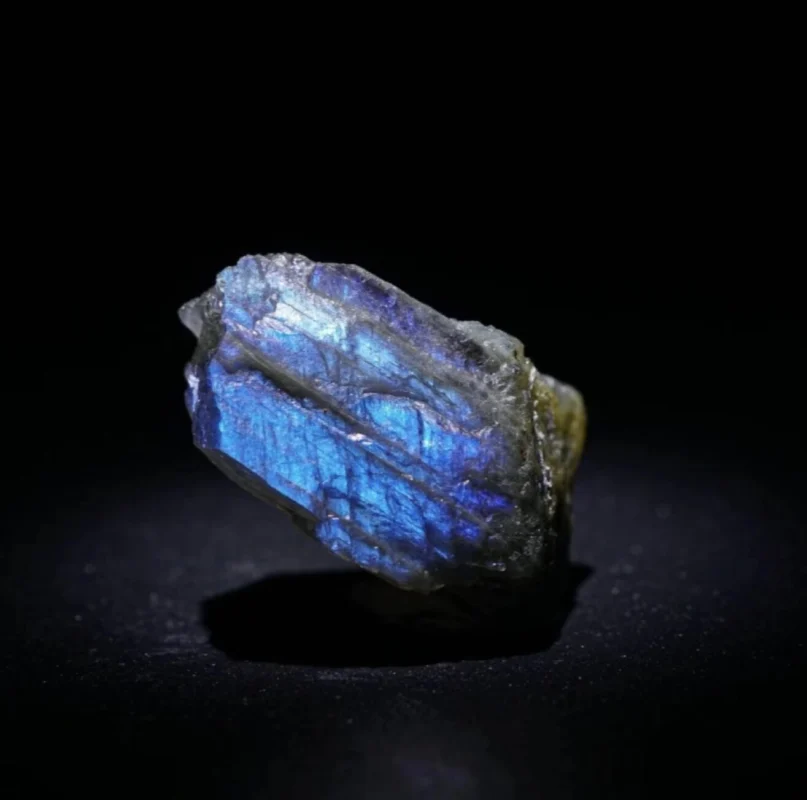
Moonstone is a variety of feldspar mineral — specifically a potassium sodium feldspar composed of alternating layers of orthoclase and albite. These alternating mineral layers are the structural origin of moonstone’s most celebrated optical property: the phenomenon known as adularescence. When light enters the stone, it scatters and refracts at the boundaries between the alternating layers, producing a floating, bluish-white sheen that appears to glow from within — an effect often described as resembling moonlight on water.
This is distinct from opal’s “fire” — adularescence is a soft, internal luminescence that shifts as the stone is turned, rather than a surface sparkle. The strength and quality of adularescence — particularly the intensity and blueness of the flash — is the primary quality indicator for moonstone.
Moonstone occurs in several color varieties: the classic colorless to milky white with blue adularescence; pale blue with strong blue flash (the most prized and typically from Sri Lanka); peach-pink (Pink Moonstone, primarily from India); and green. A frequently encountered trade name — Rainbow Moonstone — refers to a form of labradorite (a plagioclase feldspar, not true orthoclase moonstone) that displays colorful iridescence. These are related but mineralogically distinct, and the distinction matters for collectors.
The finest quality moonstone comes from Sri Lanka (formerly Ceylon), where feldspar deposits yield specimens with exceptional clarity and vivid blue adularescence. Material from India, Myanmar, and Madagascar is also available, generally at lower price points. Moonstone ranks 6 to 6.5 on the Mohs hardness scale — suitable for daily wear in jewelry but requiring basic precautions against scratching by harder stones and impact damage.
Cultural Significance
Ancient Rome
Moonstone held a significant place in Roman culture. The naturalist Pliny the Elder documented in his Naturalis Historia (Natural History) that Romans believed moonstone was solidified moonlight, and that its luster intensified and softened in sync with lunar phases. Whether literal belief or poetic observation, this description reflects careful attention to moonstone’s optical properties. Roman soldiers carried moonstone amulets into battle, believing the stone offered protection — a recurrent theme of moonstone as a traveler’s and warrior’s talisman.
Ancient India
In traditional Indian culture, moonstone was regarded as the “holy stone” directly associated with the moon deity Chandra. In Ayurvedic medicine, moonstone was believed to regulate bodily fluids — a logical association given the moon’s dominion over tides. Hindu mythology also assigned moonstone a protective role for travelers at night, said to illuminate paths and dispel fear.
Medieval and Early Modern Europe
In medieval Europe, moonstone was associated with agricultural prosperity — farmers placed specimens in their fields believing the stone would ensure abundant harvests. In Greek cultural traditions, moonstone was linked to Aphrodite, goddess of love and beauty, and was carried as an aid to awaken romantic feeling and inner beauty.
Art Nouveau and the Contemporary Era
From the late 19th century through the early 20th century, moonstone became a signature material of Art Nouveau and Jugendstil jewelry, prized by designers for its ethereal quality and used to create some of the movement’s most iconic pieces. Today, moonstone remains one of the most popular semi-precious stones in the jewelry market, and its cultural associations have continued to evolve — now firmly established in modern crystal spirituality as a stone of intuition, divine femininity, and new beginnings.
Energetic Qualities
The following reflects cultural and traditional associations within crystal-using communities and is not intended as a health or medical statement.
Intuition and Insight: Within crystal traditions, moonstone is most commonly associated with the third eye (ajna chakra) and crown chakra — governing inner perception, intuitive knowing, and the capacity to access information beyond rational analysis. Enthusiasts often use moonstone as a focal object during practices aimed at listening to inner guidance, particularly in moments requiring decisions that exceed available data.
Emotional Equilibrium: The recurring metaphor — moonstone as the stone that governs emotional tides the way the moon governs oceanic tides — points to its traditional use for emotional steadiness. The description is not that moonstone eliminates emotional波动 (fluctuation), but that it supports remaining connected to a stable inner center while emotions move through. In this reading, the stone functions as an anchor rather than a suppressant.
Divine Feminine Energy: Moonstone is widely called the “stone of the divine feminine” — a designation rooted in its association with lunar cycles and goddesses (Chandra in Hindu tradition, Selene and Luna in Greco-Roman mythology). Within modern crystal spirituality, this association has evolved into a broader framework of support for qualities culturally coded as feminine: receptivity, nurturing, cyclical awareness, and emotional intelligence.
New Beginnings: Moonstone is consistently described in crystal literature as the “stone of new beginnings” — appropriate for moments of transition: a new relationship, a new career chapter, a move to a new place. As a transitional companion, it functions symbolically: not as a cause of change, but as a tangible object that marks and honors the significance of the transition itself.
Dream Support: Some practitioners place moonstone beside the bed before sleeping, believing its soft luminosity resonates with dream consciousness and supports clearer dream recall. This use connects to moonstone’s broader traditional association with lunar cycles and the dreamlike states associated with the unconscious mind.
Who It’s For
Those who prioritize intuition-based decision-making and are looking for a symbolic anchor to support their connection to inner guidance.
Individuals navigating a life transition — professional, relational, geographic — who want a tangible companion marking the significance of the change.
Those seeking emotional equilibrium: people who want to remain anchored to their inner center without being swept away by external events or emotional reactivity.
Anyone drawn to the stone’s aesthetics: moonstone’s adularescence is one of the most distinctive and beautiful optical phenomena in the mineral world — a legitimate reason to value the stone independent of any energetic claim.
When to Use It
Meditation and Intuition Practice: Moonstone’s soft, shifting luminosity makes it a natural focal object for inward attention. The way its adularescence shifts with angle of view also provides a gentle visual focus point during seated practice.
Nighttime Ritual: Placing moonstone on a bedside table as part of an evening wind-down routine — gazing at its adularescence before sleep, or simply allowing its presence as a transitional object between waking and resting — is a simple practice common among enthusiasts.
Gifting for Significant Transitions: As the traditional June birthstone and 13th wedding anniversary gem, moonstone is an appropriate and meaningful gift for birthdays, graduations, anniversaries, and for friends entering a significant new life chapter.
Daily Wear: With a Mohs hardness of 6–6.5, moonstone is well-suited to everyday jewelry. Silver and white gold settings complement its cool tones most commonly. The stone rewards being worn and observed in motion, as its adularescence shifts most beautifully under movement and changing light.
Small pauses.Big shifts.Find your piece→
Care Instructions
Avoid Ultrasonic Cleaning: Moonstone’s layered internal structure makes it sensitive to ultrasonic vibration and thermal shock. Never use an ultrasonic jewelry cleaner on moonstone — warm water and a soft cloth is the safest and most effective cleaning method.
Keep Away from Chemicals: Perfumes, hairsprays, cosmetics, and household cleaners can dull or erode moonstone’s surface over time, diminishing the adularescence. Remove moonstone jewelry before swimming, bathing, exercising, or applying any spray products.
Store Individually: With a hardness of 6–6.5, moonstone can be scratched by harder stones including diamond, sapphire, and ruby. Store each piece wrapped in soft cloth or in a separate compartment of a jewelry box.
Avoid Extreme Heat and Temperature Shifts: Prolonged heat exposure or rapid temperature changes can cause internal stress fractures in moonstone, potentially affecting clarity and brilliance over time.
Further Reading & References
《The Crystal Bible》— Judy Hall, Godsfield Press, 2003. The foundational reference guide for crystal varieties, with a concise moonstone entry covering history, cultural associations, and traditional uses.
《The Book of Stones: Who They Are and What They Teach》— Robert Simmons & Naisha Ahsian, North Atlantic Books, 2007. The most comprehensive reference on crystal energetics; detailed moonstone entry with energetic properties and traditional correspondences.
Gemological Institute of America (GIA) — Moonstone Reference Page: https://www.gia.edu/ The authoritative gemological resource on moonstone: geological formation, optical properties, and quality grading standards.
Mindat.org — Moonstone: https://www.mindat.org/ The world’s largest open-access mineral database with moonstone locality data, mineralogical specifications, and geological background.
FAQ
Strictly speaking, no. True Moonstone (Orthoclase Moonstone) belongs to the orthoclase feldspar family, with the finest specimens — those displaying vivid blue adularescence — coming primarily from Sri Lanka. “Rainbow Moonstone,” however, is a trade name for a variety of Labradorite, which is a plagioclase feldspar. The two share a family resemblance (both are feldspars) but have different mineral compositions, geological origins, and optical properties. Rainbow Moonstone displays colorful iridescence rather than the characteristic blue-white adularescence of true moonstone. If mineralogical precision matters to you, check for the scientific name on a gemological certificate.
The optical effect is called adularescence. Light entering moonstone scatters and refracts at the boundaries between alternating layers of orthoclase and albite within the stone. This scattering produces a floating, bluish-white sheen that appears to move just beneath the surface — and it shifts as you turn the stone. The stronger and bluer the flash, the more valuable the moonstone. This effect is why moonstone is prized and why it cannot be synthetically reproduced in the same way some other gems can be.
Moonstone is the traditional June birthstone and the 13th wedding anniversary gem. As a gift it carries multiple layers of meaning: intuition and insight (as a companion for those navigating new decisions), emotional balance (a caring, supportive presence), and divine femininity and romance (connecting to goddess energy and lunar cycles). It is an appropriate and thoughtful choice for birthdays, graduation gifts, anniversary presents, and as a meaningful offering for friends entering a new chapter of life.
Three primary precautions: keep it away from ultrasonic cleaners, harsh chemicals, and heat — all of which can damage the stone’s internal structure and dull its adularescence over time. Remove moonstone jewelry before swimming, bathing, exercising, or applying sprays. Store separately from harder gems (diamond, sapphire, ruby) to prevent surface scratches. For cleaning, warm water and a soft cloth are all you need. With basic care, moonstone retains its luminous beauty for many years of wear.