
Sunlight Trapped in Crystal
Citrine takes its name from the French word citron, meaning lemon — and its color is its identity. Ranging from pale straw yellow to deep amber and rich Madeira orange, citrine is the yellow to orange variety of macrocrystalline quartz. Its warm coloration comes from trace amounts of iron embedded within the crystal structure.
Natural citrine is relatively rare in gem-quality form. Most citrine available in the jewelry market today is actually heat-treated amethyst — a process that deepens amethyst’s purple into warm yellows and oranges. Heated amethyst and natural citrine are virtually identical in appearance and durability; the distinction matters primarily for collectors and gemologists, not for wearers. Natural citrine, when available, forms in the same hexagonal crystal system as clear quartz and amethyst, growing in distinctive prisms with terminated points. Its Mohs hardness of 7 makes it excellent for jewelry use — durable enough for everyday wear.
The warm golden color of citrine has drawn human attention since antiquity. The ancient Greeks carved ornamental objects and rings from citrine, and Roman jewelers used it extensively in signet rings, a tradition that continued into the Victorian era in Scotland. Scottish kilt pins, bonnet brooches, and shoulder brooches from the Victorian period frequently featured citrine as a center stone, valued for its warm, golden glow.
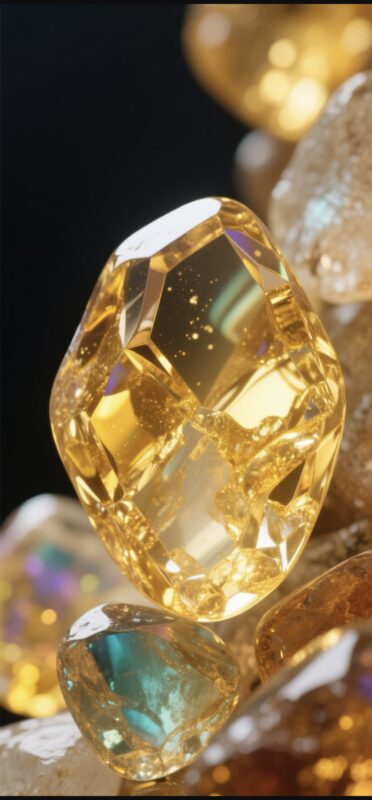
A Stone Warmed by History
Citrine’s warm color has made it a symbol of sunlight, prosperity, and positive energy across nearly every culture that encountered it.
Ancient Greece & Rome: Greek and Roman lapidaries worked citrine into signet rings, decorative objects, and jewelry. Citrine’s warm golden color associated it with the sun — with warmth, vitality, and the life-giving power of light. Roman soldiers wore citrine amulets believing the golden stone would protect them in battle and bring victory — an association that connects directly to the modern description of citrine as a stone of confidence and personal power.
Victorian Scotland: During the late 19th century, citrine became one of the most fashionable gemstones in Scotland. The Glasgow School of art and design incorporated citrine extensively in Celtic-inspired jewelry, and the stone appears prominently in the collections of the Scottish National Portrait Gallery. Scottish tradition held that citrine brought clarity of thought and warmth of spirit — a belief reflected in its continued use as a stone of creativity and optimism in modern practice.
Eastern Traditions: In Chinese and East Asian culture, gold and yellow represent wealth, prosperity, and imperial authority. Yellow jade, golden topaz, and citrine were all valued in this context — as stones that radiated wealth energy and attracted material abundance. In feng shui practice, placing citrine crystals in the wealth corner (southeast) of a home or office is a common tradition, described as a way to activate and attract financial prosperity and positive energy related to abundance.
Brazil & South America: Brazil is the world’s largest source of citrine, with the state of Minas Gerais producing significant quantities of natural and heat-treated citrine. Indigenous South American cultures had access to quartz varieties for millennia, and citrine appeared in pre-Columbian trade goods.
Across every tradition, citrine’s defining quality is warmth — not physical warmth, but the warmth of a good mood, of good fortune, and of a mind that leans toward optimism rather than doubt. That warmth, and the joy it represents, is what made citrine one of the most widely used decorative stones in human history.
Spiritual Properties & Energetic Qualities
In the modern crystal lexicon, citrine occupies a unique position — it is the stone most consistently described as a stone of abundance, joy, and personal empowerment.
Contemporary energy practitioners describe citrine as one of the most uplifting stones available. Its warm golden energy is described as naturally countering feelings of doubt, self-doubt, and pessimism — not by suppressing them, but by introducing a quality of warmth and brightness that makes those heavy states feel less absolute. When you are feeling stuck, cynical, or hesitant, holding or wearing citrine is traditionally described as a way to restore a sense of forward momentum and joyful engagement with life.
Citrine is also widely described as a stone of personal power and confidence. This is not aggressive or dominant power — it is the power of someone who feels good about themselves, who believes their efforts are worthwhile, and who is willing to put themselves forward. For people who tend to hold back, stay quiet, or defer to others, citrine is frequently described as a supportive companion — helping to bring warmth and confidence into situations where those qualities feel lacking.
Finally, citrine is the stone most commonly associated with attracting abundance and positive energy related to prosperity. In feng shui practice, citrine occupies a specific role as a wealth activator. In modern crystal practice, this translates to citrine being used during moments of new beginnings — launching a project, starting a business, beginning a new chapter — as a stone described as supporting the energy of positive intention and forward momentum.
Who Is Citrine For
Citrine is one of the most joyful and accessible crystals you can work with. It suits people who tend toward pessimism, self-doubt, or hesitancy — providing a warmth of energy that feels encouraging rather than demanding.
If you are starting something new — launching a business, beginning a creative project, taking on a new professional challenge — citrine is traditionally used as a supportive stone for that moment of beginning, described as helping to set a tone of optimism and confidence from the outset.
If you tend to hold yourself back in situations where you have something to offer, citrine may serve as a gentle reminder that your voice and presence have value. And if you simply want a stone that feels warm, sunny, and pleasant to wear — that carries a sense of ease and lightness as much as any spiritual property — citrine delivers that in abundance.
When to Wear
- When starting something new — a project, a business, a creative endeavor, a new professional role.
- On days when you need a mood boost — when pessimism, doubt, or heaviness has crept in.
- During situations where you want to bring warmth, confidence, and a sense of optimism to the room.
- As a daily companion during difficult or uncertain times, when a sense of light-hearted confidence is especially grounding.
Small pauses.Big shifts.Find your piece→
Care Guide
Citrine ranks 7 on the Mohs scale — making it a durable choice for everyday jewelry. But its warm color benefits from a few simple habits that keep it looking its best over time.
Protect citrine from prolonged direct sunlight. Like many yellow and orange gemstones, extended exposure to strong sunlight can cause citrine to fade over time. This is particularly relevant for pieces worn at the beach, by the pool, or in outdoor settings during summer — remove citrine jewelry before extended sun exposure to preserve its warm color.
Avoid harsh chemicals. Perfume, hairspray, cleaning agents, and cosmetics can dull citrine’s surface luster over time. Apply sprays and creams before putting on citrine jewelry, and wipe gently with a soft cloth after wearing.
Clean citrine with warm, soapy water and a soft brush. It is safe in water for regular cleaning. Avoid steam cleaners and ultrasonic cleaners, which can cause thermal shock. Store separately from harder gemstones to prevent scratching. For energetic cleansing, moonlight and sage smudging are gentle, effective methods — citrine is described as a bright, warm stone that responds particularly well to sunlight and lunar energy cleansing.
Further Reading & References
1. The Crystal Bible — Judy Hall, Godsfield Press, 2003 (first edition); revised and expanded in subsequent editions.
One of the world’s best-selling crystal reference guides, with a detailed entry on citrine as the “stone of abundance.”
2. The Book of Stones — Robert Simmons & Naisha Ahsian, North Atlantic Books, multiple editions since 2005.
Widely regarded as one of the most authoritative references in the modern crystal field. The citrine entry covers its properties, history, and uses in detail.
3. The Encyclopedia of Crystals, Herbs, and New Age Items — Rosemary Gladstar, Storey Publishing, 2012.
A foundational reference in the contemporary crystal and holistic wellness community.
4. GIA — Gemological Institute of America: Citrine — https://www.gia.edu/citrine/ (accessed 2026)
The Gemological Institute of America’s official gem information page on citrine — covering origin, formation, color treatment, and market availability.
5. Scottish National Portrait Gallery — Victorian Jewelry Collection — https://www.nationalgalleries.org/ (accessed 2026)
The Scottish National Portrait Gallery holds significant collections of Victorian-era citrine jewelry, documenting the stone’s popularity in 19th century Scotland.