
The Stone Itself
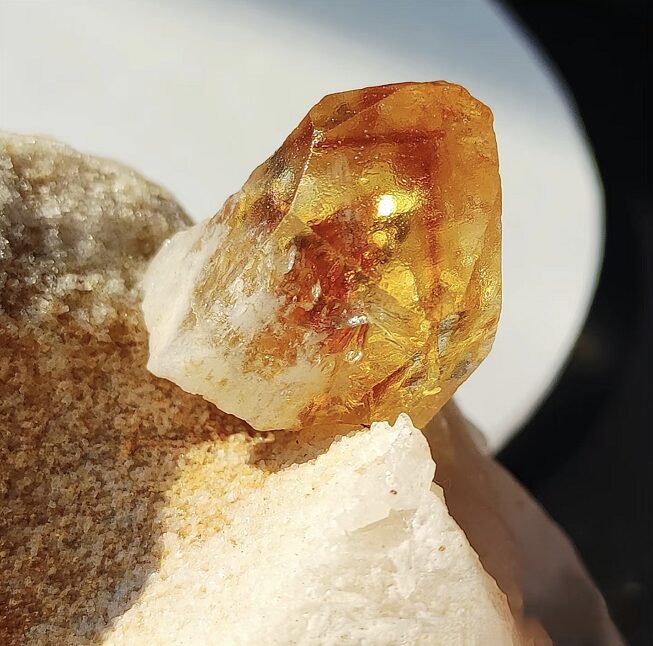
Citrine Phantom Quartz — commonly known in the Chinese market as 塔晶 (Ta Jing, “tower crystal”) — is a variety of clear or citrine quartz that displays one or more distinct crystalline outlines suspended within its body. These internal formations, called phantoms, appear as layered pyramidal or tower-like silhouettes, as if a smaller crystal is frozen inside the host stone. The effect is entirely natural and is created when a period of crystal growth is interrupted and then resumes, leaving a visible record of the crystal’s former surface within the stone.
The mineral composition is silicon dioxide (SiO₂). A crystal seed begins growing in a hydrothermal vein or igneous cavity; at some point, growth pauses and the crystal is coated in a layer of mineral sediment — commonly chlorite, hematite, iron oxide, or other surrounding minerals. When growth resumes, fresh quartz deposits over that sediment layer, and the coating remains visible as a ghost-like outline. When the sediment layers accumulate in a pyramidal shape with each pause, the result is the stacked, tower-like structure that gives Yellow Phantom Citrine its most dramatic appearance.
In the international crystal trade, this material is primarily referred to as Phantom Quartz or Citrine Phantom Quartz. The term Pagoda Quartz or Tower Quartz appears occasionally in English-language markets, particularly in Southeast Asia and among collectors who trade with Chinese-speaking markets. The visual descriptor “phantom” is universal and widely recognized; the tower-like silhouette is a specific variation of that phenomenon particular to the Chinese market name 塔晶.
What distinguishes Citrine Phantom Quartz from ordinary included quartz is the sense of geological time it conveys. The phantom outline marks a specific moment of interruption in the crystal’s growth — a geological event, a shift in mineral chemistry, or a change in temperature and pressure — preserved in permanent relief within the stone. To hold a piece of Phantom Citrine is, in a small way, to hold a record of deep time.
Color Varieties
The color of a Phantom Quartz is determined by the host crystal’s base mineral and the mineral coating that formed the phantom outline. Three main varieties are recognized in the market.
Yellow Phantom Citrine (黄塔晶) The most recognizable variety. The host crystal is citrine — yellow to amber quartz colored by trace iron — and the phantom layers are typically composed of iron oxide, goethite, or amber-colored mineral dust. The result is a transparent to translucent golden-yellow crystal in which layered pyramidal silhouettes appear in deeper gold or amber tones. High-clarity specimens with clearly defined tower phantoms are the most valued in this variety. It is worth noting that much of the citrine sold in mass markets is heat-treated amethyst rather than natural citrine; for Phantom Citrine to be genuine, the host crystal and its phantom both need to be natural quartz.
White Phantom Quartz (白塔晶) A clear or milky quartz host with white to pale grey phantom outlines, usually formed by chlorite or feldspar inclusions. The tower-like silhouettes are more subtle in this variety — the host crystal is often quite clear, and the phantom appears as a faint geometric form suspended within rather than a dramatic color contrast. White Phantom Quartz has a quiet, contemplative quality that many collectors find appealing for its understatement.
Amethyst Phantom (紫塔晶 / Red Phantom) Also called Spirit Quartz in some markets. The host crystal is amethyst or a blend of amethyst and citrine (sometimes called Ametrine in this context), and the phantom layers carry the purple to violet tones of the host. Where the phantom layers overlap with zones of citrine yellow, some specimens display a striking dual-color phantom effect — purple and gold stacked within the same tower silhouette. These bi-colored phantom specimens are the rarest and most collectible of the group.
Cultural Significance
In East Asian Stone Culture
Tower forms carry deep symbolic weight in Chinese and broader East Asian traditions. The pagoda — a tiered Buddhist tower structure — is one of the most recognizable symbols in the architecture of the region, associated with spiritual aspiration, ascending levels of enlightenment, and the impermanence of worldly things. The word 塔 (ta) in Chinese refers specifically to Buddhist tower structures that enshrine relics, making the term 塔晶 (“tower crystal”) not merely a description of the stone’s appearance but an intentional cultural reference.
In the context of scholar’s stones and decorative minerals, the appeal of Citrine Phantom Quartz is the same as that of any fine included stone: it contains something unexpected, a world within the world. The additional tower-like quality adds a layer of cultural resonance that pure phantom quartz does not carry. It is a stone that references both natural wonder and architectural symbolism simultaneously.
In Western and Contemporary Crystal Markets
In the international crystal trade, Phantom Quartz of all colors is associated with the concept of hidden potential — the idea that beneath a surface state lies a deeper or earlier self still present and formative. This symbolic reading is applied to all phantom varieties, regardless of color. Citrine Phantom Quartz carries the additional association of warmth, clarity, and personal intention often attributed to citrine itself. The tower-like stacking of phantom layers is sometimes read by crystal practitioners as a symbol of accumulated wisdom or layered personal growth — each pause in the crystal’s growth marking a stage of development.
Energetic and Spiritual Properties
Citrine Phantom Quartz is most commonly described in crystal practice as a stone of accumulated clarity, inner layering, and patient growth. It combines the warm clarity of citrine with the introspective depth of phantom formation.
- Accumulated insight. Because a phantom crystal records a period of interrupted growth within its structure, it is symbolically associated with the insight that comes from pausing and reflecting rather than always moving forward. Crystal practitioners describe it as a stone that supports the integration of past experience into present clarity — a form of emotional and psychological layering that builds wisdom over time.
- Warm clarity. Citrine is historically one of the most widely used stones for warmth of intention — the sense that one’s purpose is clear and one’s direction is sure. When citrine carries a phantom formation, this clarity is understood to be deepened rather than brightened — a more reflective, layered quality of certainty rather than a simple one.
- Tower resonance and ascent. The pyramidal or tower-like shape of the phantom outline carries a specific symbolic charge in markets where tower forms have cultural meaning. Practitioners describe it as a stone associated with upward movement, clear intention, and purposeful ascent — less about dramatic transformation and more about steady, layered elevation.
- Contemplation and stillness. The quiet drama of a phantom formation — something visible but unreachable, a world within a world — lends itself naturally to contemplative use. A specimen of Citrine Phantom Quartz held during meditation or placed in a study offers a visual anchor for stilling the mind while engaging with the imagination.
These descriptions reflect the philosophical and energetic framework of crystal practice. There is no scientific evidence that any gemstone or crystal has measurable effects on human health, emotional state, or spiritual experience. These characterizations are presented as the cultural context in which Citrine Phantom Quartz is understood and valued.
Who It’s Suited For
- For those who value depth over brightness. Citrine Phantom Quartz is not a loud stone. Its visual interest is quiet and layered, visible in good light but not demanding constant attention. For people who prefer understated objects with hidden complexity, this is an ideal choice.
- For those in a phase of patient development. The phantom formation — a record of interrupted and resumed growth — is a natural symbol for phases of life that involve setbacks, pauses, and renewed momentum. For anyone navigating a period of rebuilding or slow progress, the stone is often chosen as a quiet supportive companion.
- For collectors of geological and optical phenomena. Phantom Quartz occupies a specific niche in the included quartz collector market. Specimens with clearly defined pyramidal formations, high clarity, and vivid color contrast between host and phantom are the most valued. The tower silhouette adds an additional dimension of interest for collectors who appreciate both natural form and cultural resonance.
- For those drawn to warm gold tones. Yellow Phantom Citrine in particular offers the warmth and depth of golden citrine combined with the structural fascination of the phantom formation. It is one of the most visually distinctive ways to wear or display yellow quartz.
Suitable Occasions
- Everyday wear. Yellow Phantom Citrine in bead or pendant form works well as a daily piece. Its warm gold tone pairs naturally with neutral and earth-toned clothing. The phantom formation is best appreciated in person, making it a stone that rewards attention from those who handle it rather than those who simply glimpse it.
- Desk and study display. A small polished or raw specimen of Citrine Phantom Quartz on a desk or windowsill serves as a contemplative object. The tower silhouette within invites repeated looking, and the stone performs well in natural light where the phantom formation is most visible.
- Gifting. Citrine Phantom Quartz makes a thoughtful gift for someone who appreciates unusual minerals, layered symbolism, or warm golden tones. The tower formation adds a narrative quality that makes the gift feel considered and personal.
- Meditation and reflective practice. Holding a phantom quartz specimen during meditation is a common practice among those who work with crystals. The internal formation provides a visual focus point, while the layered structure supports the symbolic quality of introspection and accumulated insight.
Small pauses.Big shifts.Find your piece→
Care Instructions
Citrine Phantom Quartz ranks approximately 7 on the Mohs hardness scale, placing it in the same durability range as clear quartz and citrine. It is suitable for daily wear with reasonable care.
- Cleaning. Use lukewarm water and a soft cloth or brush. Mild soap can be used for deeper cleaning. Avoid ultrasonic cleaners, steam, and harsh chemical cleaners. The internal phantom formation is a natural structural feature and is not improved by aggressive cleaning; the minerals that form the phantom layer can be sensitive to harsh treatment over time.
- Sunlight. Prolonged direct sunlight may gradually affect the color intensity of citrine host crystals over very long periods. Display specimens in bright indirect light for best long-term color retention. The phantom formation itself is unaffected by light, as it is a structural feature rather than a surface treatment.
- Storage. Store separately from harder stones such as diamonds, sapphires, and topaz, which can scratch the quartz surface. A soft pouch or lined jewelry box compartment is ideal. Avoid impact: while the quartz matrix is durable, a hard blow near the phantom zone can cause the internal formation to fracture.
- Wearing. Remove before swimming, showering, applying perfumes or lotions, or any activity involving impact or chemical exposure. Chlorine and salt water can affect the clarity of the host crystal over time.
Further Reading and References
- Schumann, Walter. Gemstones of the World. New York: Sterling Publishing, 2013.
- Hall, Judy. The Crystal Bible. Salisbury: Octopus Publishing, 2003.
- Pough, Frederick H. A Field Guide to Rocks and Minerals. Boston: Houghton Mifflin, 1996.
- Rundell, Rebecca. “Phantom Quartz: Formation and Varieties.” Mineral Digest, Vol. 8, 2019.
- Cibula, G. & McCourt, R. Quartz: Varieties, Formation, and Identification. Tucson: Geoscience Press, 2004.
FAQ
Citrine Phantom Quartz is a variety of clear or citrine quartz that displays one or more distinct crystalline outlines — called phantoms — suspended within its body. These phantom formations appear as layered pyramidal silhouettes, as if a smaller crystal is frozen inside the host stone. It forms when a period of crystal growth is interrupted and resumes, leaving a mineral sediment layer trapped inside. The Chinese market calls this stone 塔晶
(Ta Jing), referring to the tower-like layered appearance of the phantom formation. In English it is known as Phantom Quartz, Citrine Phantom Quartz, or Pagoda Quartz.
The phantom pattern forms when a growing quartz crystal is temporarily coated in a layer of mineral sediment — commonly chlorite, hematite, goethite, or iron oxide — and then resumes growing over that layer. Each interruption leaves a visible outline; when multiple interruptions occur in a pyramidal arrangement, the result is a stacked, tower-like phantom silhouette. Each pause in growth represents a geological event — a shift in temperature, pressure, or mineral chemistry — preserved permanently within the stone. The number of phantom layers in a specimen reflects how many growth interruptions occurred.
Citrine Phantom Quartz ranks approximately 7 on the Mohs hardness scale. Clean it with lukewarm water and a soft cloth or brush. Avoid ultrasonic cleaners, steam, and harsh chemicals. Prolonged direct sunlight may gradually affect the color intensity of the citrine host crystal over very long periods — store display specimens in bright indirect light rather than continuous direct sun. The phantom formation itself is a structural feature and is not affected by light. Store separately from harder stones like diamonds and sapphires, which can scratch the quartz surface.
The phantom formation is entirely natural. It is a product of the crystal’s growth history in the earth — specifically, a sequence of interruption and resumption of quartz growth combined with mineral sediment deposition. There is no known artificial process that replicates the layered pyramidal phantom effect in quartz. However, be aware that much of the citrine sold in mass markets is heat-treated amethyst rather than natural citrine — for a genuine Citrine Phantom Quartz, both the host crystal and the phantom layers should be composed of natural quartz, not treated material.