
Material
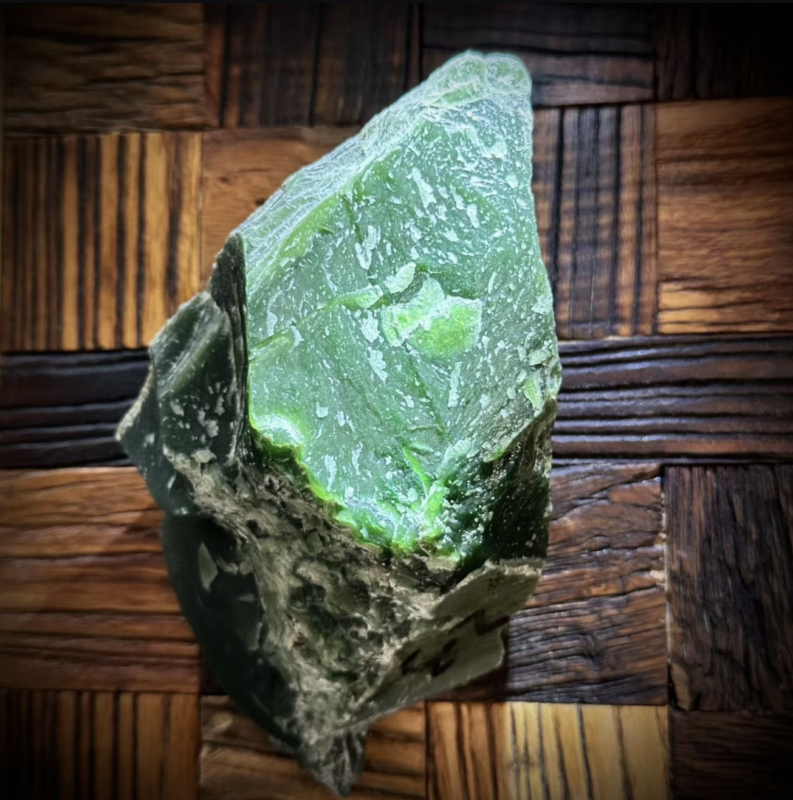
Green Jasper is an opaque variety of chalcedony, a microcrystalline form of quartz (SiO₂), distinguished by its deep forest-green color ranging from pale olive to rich emerald. Its color comes from inclusions of chlorite, actinolite, or other iron-rich silicate minerals dispersed throughout the silica matrix. Unlike translucent varieties of quartz, Jasper’s dense, granular structure prevents light from passing through, giving it a smooth, matte finish when polished. It has a hardness of 6.5–7 on the Mohs scale, making it durable enough for everyday wear in jewelry. Jasper forms through the precipitation of silica from mineral-rich waters in cavities and fractures of sedimentary and volcanic rocks, often displaying distinctive banding, orbicular patterns, or dendritic inclusions that make each stone unique.
Cultural Significance
Across ancient civilizations, Green Jasper was revered as a stone of wholeness and connection to the earth.
Ancient China: Known as “Yu” (玉) in the broader jade-like tradition, green stones including Jasper were associated with virtue, protection, and harmony between heaven and earth. Jade-like stones were buried with the deceased to ensure safe passage into the afterlife.
Mesopotamia: The Sumerians carved Green Jasper into cylinder seals and amulets, believing it channeled divine blessings. It was linked to the goddess Inanna and used in ceremonial objects.
Ancient Egypt: Green Jasper was associated with the goddess Isis and the concept of Ma’at (cosmic balance and truth). Scarab amulets carved from green stone were placed in tombs to protect the deceased.
Native American Traditions: Various Indigenous nations of North America used Green Jasper in ceremonial objects and as a talisman during hunts, honoring its deep green as a gift from the earth mother.
Ancient Rome: Roman soldiers carried Green Jasper for courage and stamina, sometimes setting it into sword hilts or wearing it as a protective amulet during battle.
The recurring theme across these cultures is Jasper as a stone of grounding, protection, and deep connection to the natural world — a stone that anchors human intention to the enduring power of the earth itself.
Energetic Qualities
Green Jasper is regarded in crystal traditions as a stone of deep steadiness and earth connection. It is associated with a calming, grounding presence — the kind of energy that settles the mind and brings attention back to what is immediate and real. Practitioners value it for its ability to foster a sense of patience and resilience, supporting one through periods of prolonged effort or uncertainty without losing center. Its connection to the natural world is considered one of its most defining qualities — an energy that evokes the quiet persistence of moss, the depth of old forests, and the unhurried rhythms of the earth. Green Jasper is also associated with the heart chakra in energy work traditions, valued for its ability to open the heart to compassion, generosity, and care for both self and others. Many who work with this stone describe a feeling of being quietly supported — as though the stone holds a steady space that allows for clearer thinking and greater emotional balance. Its nurturing green energy is seen as a complement to environments of meditation, creative work, and daily life alike.
Who It Suits
· Those who feel drawn to nature and seek a tangible reminder of the natural world in their daily life
· Individuals navigating long-term projects, academic pursuits, or demanding professional responsibilities who want a grounding companion
· People who value patience, steadiness, and quiet resilience as personal qualities
· Anyone seeking to deepen their sense of connection to the earth and natural rhythms
· Those who appreciate the beauty of deep green stones and want a meaningful, everyday piece of jewelry
When to Wear It
Daily wear: A subtle, elegant piece that brings earthy sophistication to any outfit — from casual daytime looks to thoughtful evening attire
Meditation and mindfulness practice: Used as a tactile anchor to deepen presence and keep attention grounded during sitting practice
Nature walks and outdoor rituals: A stone that feels at home outdoors, complementing time spent in gardens, forests, or wild places
Work and study environments: Kept nearby during focused work sessions to support a calm, steady mindset throughout the day
Small pauses.Big shifts.Find your piece→
Care Instructions
Clean with lukewarm soapy water and a soft cloth; avoid harsh chemicals, steam, or ultrasonic cleaners
Remove before swimming, bathing, or engaging in strenuous physical activities to protect the stone’s surface
Store separately from harder gemstones to prevent scratching; a soft pouch or lined jewelry box is ideal
Recharge under indirect moonlight or by placing on a bed of dry earth for a few hours; avoid prolonged direct sunlight, which may fade its deep green color over time
Further Reading
Simmons, Robert & Ahsian, Naisha. The Book of Stones: Who They Are and What They Teach. North Atlantic Books, 2007.
Hall, Judy. The Crystal Bible: A Definitive Guide to Crystals. Godsfield Press, 2003.
Gladstar, Rosemary. The Encyclopedia of Crystals, Herbs, and New Age Items. Storey Publishing, 2012.
Smithsonian National Museum of Natural History — Gem and Mineral Collection: https://naturalhistory.si.edu
FAQ
Green Jasper is an opaque variety of chalcedony, a microcrystalline form of quartz, distinguished by its deep forest-green color ranging from pale olive to rich emerald. Its color comes from inclusions of chlorite, actinolite, or other iron-rich silicate minerals. Each specimen is unique, often displaying distinctive banding or natural veining patterns.
Green Jasper is associated with grounding, protection, and deep connection to the natural world. Across ancient cultures — from Mesopotamia to ancient Rome — it was regarded as a stone that anchors human intention to the enduring power of the earth. It is valued as a stone of patience, steadiness, and quiet resilience.
Clean with lukewarm soapy water and a soft cloth; avoid harsh chemicals, steam, or ultrasonic cleaners. Store separately from harder gemstones to prevent scratching. Recharge under indirect moonlight or on dry earth; avoid prolonged direct sunlight, which may fade its deep green color over time.