
1. The Stone
Rutilated Quartz is among the most distinctive members of the quartz family. Its base is silicon dioxide (SiO₂) — the same compound as clear quartz — but suspended within it are needle-like crystals of rutile, primarily composed of titanium dioxide (TiO₂). As quartz crystals grow slowly in subterranean cavities over thousands of years, these rutile needles become trapped inside, forming the internal landscape that makes each rutilated quartz specimen unlike any other.
With a hardness of 7 on the Mohs scale, rutilated quartz is durable enough for daily wear in jewelry. The rutile needles inside vary dramatically in their arrangement: some run parallel, others radiate outward, some are fine as silk threads, others thick as gold wire. This natural irregularity is precisely what makes rutilated quartz so compelling — no two stones have the same internal pattern, and the inclusions are often denser in some areas and sparse in others, creating depth and movement within the crystal.
Rutilated quartz is not a single-colored gem. The color of the rutile needles — which ranges from golden yellow to deep black, from warm red to silvery gray and soft green — determines the variety. This color variation is driven by trace elements present in the rutile during formation, and it is the primary basis for how rutilated quartz is categorized in the marketplace.
2. Cultural History
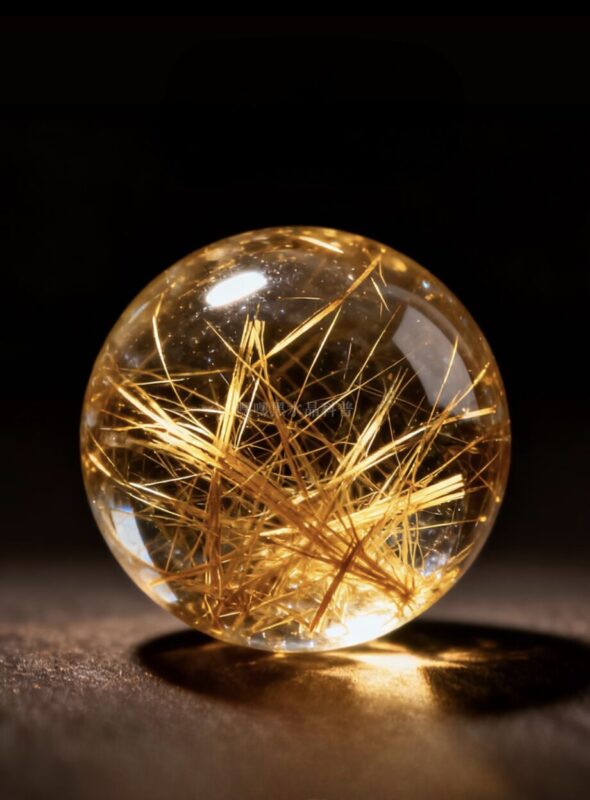
Golden Rutilated Quartz
Golden rutilated quartz has held a place of significance in both Eastern and Western lapidary traditions. The Roman naturalist Pliny the Elder described quartz specimens with golden needle inclusions in his Naturalis Historia (circa 77 AD), noting them as ‘stones with gold contained within.’ Medieval European lapidaries classified golden rutilated quartz among the ‘sun stones,’ associating it with clarity of mind and the accumulation of insight. In traditional Chinese mineral culture, its golden color linked it to prosperity and wealth, placing it in the same symbolic family as gold and amber.
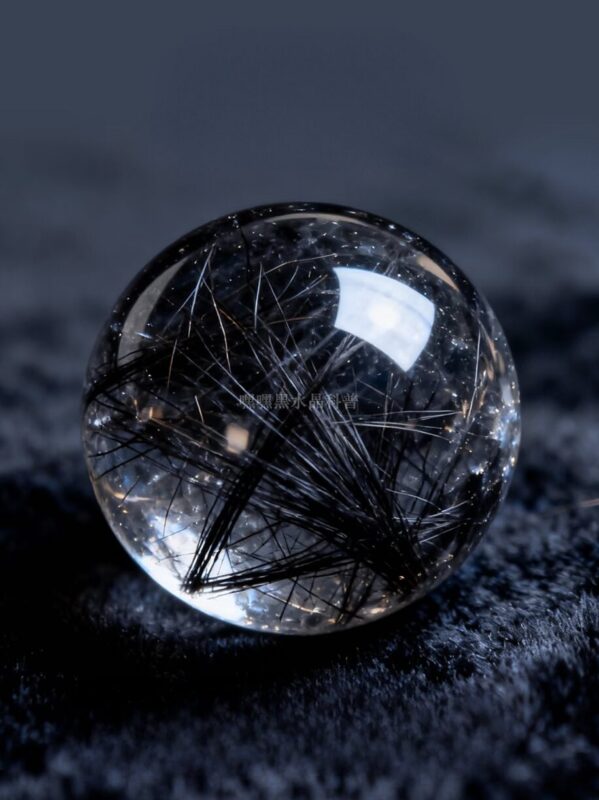
Black Rutilated Quartz
Black rutilated quartz features dark needle inclusions that create a striking contrast against the clear or smoky quartz host. European mineralogical texts from the Renaissance period describe black rutilated quartz as a stone with ‘inner sight’ — the transparent outer shell and the dark radiating needles within were seen as a physical metaphor for seeing beneath the surface of things. Crystal merchants of this era frequently used it as an aid in meditation and scrying, believing it helped the practitioner perceive what was not immediately visible. In Asian mineral traditions, black rutilated quartz has also been associated with grounding and protective qualities, its deep tones suggesting stability and endurance.
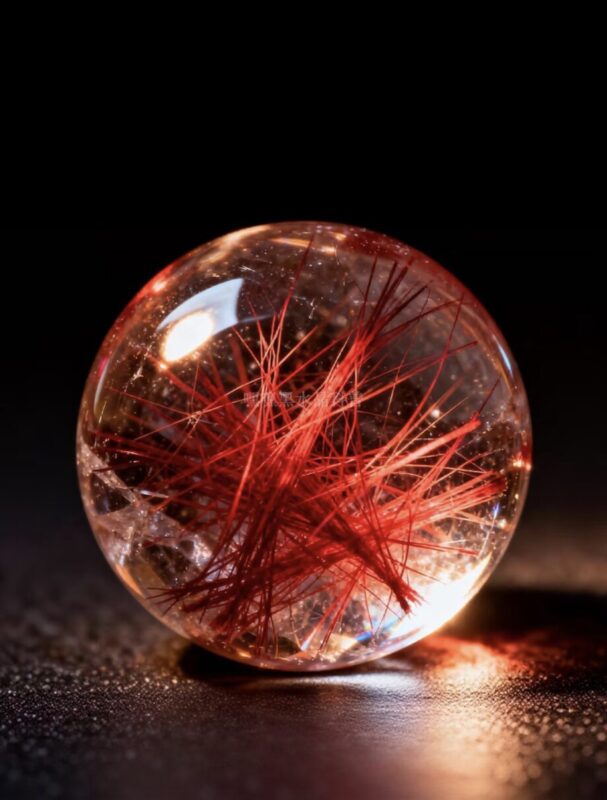
Red Rutilated Quartz
Red rutilated quartz displays reddish to reddish-brown needle inclusions. In Western traditions, red stones have consistently been linked with vitality, courage, and decisive action. Roman soldiers and decision-makers were known to carry red stones as pre-battle talismans, and 17th-century European mineralogical field notes contain early references to red rutile inclusions in quartz as objects of curiosity and value.
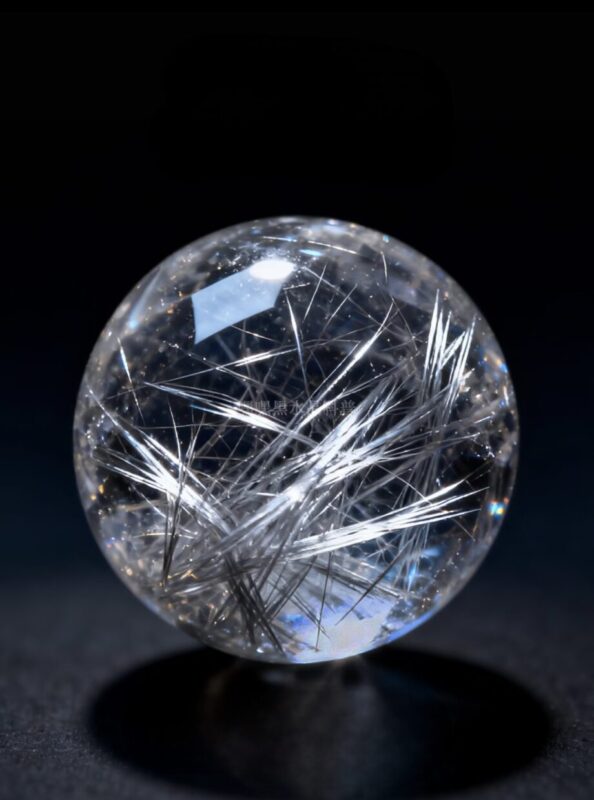
Silver Rutilated Quartz
Silver rutilated quartz — its needle inclusions appearing in silvery gray — has been prized by collectors for its understated, contemplative quality. During the Victorian era, when mineral specimen collecting was at its height among European naturalists, silver rutilated quartz was admired for its cool tones and the delicate, feather-like quality of its internal needles. It was associated with introspection, quietude, and the virtue of restraint.
Green Rutilated Quartz
Green rutilated quartz contains needle-like inclusions of minerals such as actinolite or chlorite, which give it a soft green rather than yellow hue. In both Eastern and Western gem traditions, green stones are consistently associated with nature, growth, and balance. Green rutilated quartz is comparatively rarer in the market, and its muted, natural coloring has made it a favored choice in contemporary jewelry design for those who want the energetic qualities of rutilated quartz in a more understated form.
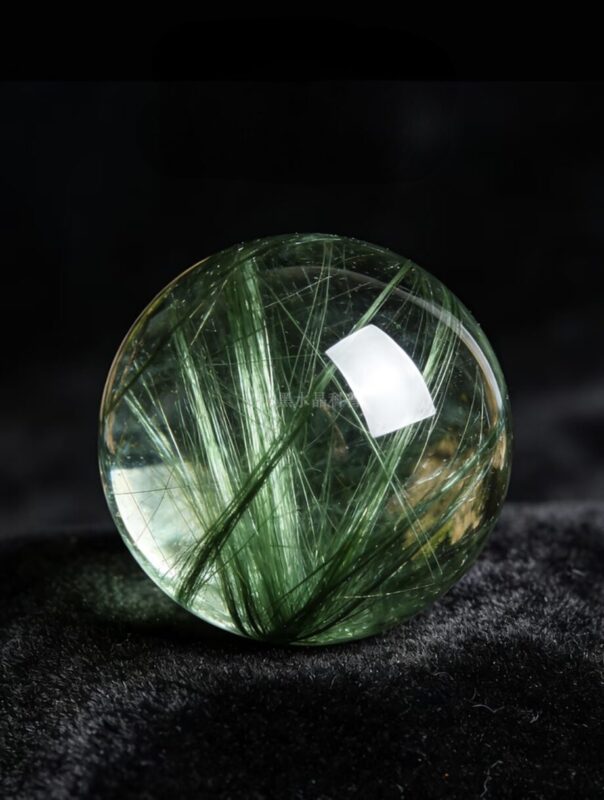
Across all color varieties, one symbolic thread runs consistently through the history of rutilated quartz: the stone contains light — the luminous quality of the rutile needles — suspended in transparency, the clear quartz host. This imagery of contained light and visible inner strength has given rutilated quartz its enduring cultural identity as a stone of inner vision, present across multiple traditions and centuries without significant interruption.
3. Energetic Properties
The energetic character of rutilated quartz is closely tied to its physical structure: the quartz host provides a medium of clarity and transparency, while the rutile needles represent inner energy, direction, and focus. Different color varieties carry different energetic emphases.
Golden rutilated quartz is most commonly associated with mental clarity and inner wisdom. Its golden tones have long connected it to intellectual pursuits and the capacity to see clearly in complex situations. Black rutilated quartz carries a grounding, stabilizing energy — its dark needles offer a sense of depth and interiority, supporting moments of reflection and self-examination. Red rutilated quartz is associated with dynamism and courage, often chosen by those who need to act decisively. Silver rutilated quartz brings a quiet, focused quality that supports concentration and contemplative states. Green rutilated quartz, the rarest variety, tends to be chosen for its balancing and harmonious properties, supporting emotional equilibrium.
Rutilated quartz does not transform the wearer’s nature — it acts more as a mirror than a lamp, reflecting inner conditions with greater clarity and helping the wearer maintain focus on what matters in moments of complexity. It is most often described as a stone of insight rather than a stone of change.
4. Who It’s For
- Intellectual workers — writers, researchers, analysts, strategists — who need to maintain sharp focus and clear judgment over extended periods
- Individuals navigating significant decisions, who want a daily object that serves as a quiet anchor for clarity of thought
- Those who appreciate jewelry with an intellectual or spiritual dimension, and want something more than a purely decorative accessory
- Mineral collectors and enthusiasts of natural formations who find meaning in the fact that each stone’s internal pattern is entirely unrepeatable
5. When to Use It
- Before high-stakes meetings or negotiations — wearing rutilated quartz as a grounding anchor during preparation
- During long travels, time zone shifts, or periods of disruption — when your environment changes faster than your mind can adapt
- During meditation or quiet introspective periods — holding the stone or wearing it nearby as part of a daily ritual
- As everyday jewelry — rutilated quartz has a refined, low-key luster that integrates naturally into a range of personal styles without announcing itself
Small pauses.Big shifts.Find your piece→
6. Care Instructions
- Avoid prolonged exposure to perfume, bleach, and strong cleaning agents — both the quartz and any metal components are vulnerable to corrosion
- Clean with warm water and a small amount of mild soap, wiping gently with a soft cloth. Do not use ultrasonic cleaners or hard brushes, which may disturb the elastic cord or scratch the stone surface
- Store separately from other jewelry in a soft pouch or individual compartment to prevent scratching from harder stones or metal
- For elastic cord bracelets, avoid soaking in water for extended periods and refrain from pulling the cord taut during storage
7. Further Reading & References
· Robert Simmons & Naisha Ahsian, The Book of Stones: Who They Are and What They Teach, Berkeley, North Atlantic Books, 2007. — The definitive contemporary reference on crystals and minerals, with a dedicated chapter on rutilated quartz varieties.
· Judy Hall, The Crystal Bible: A Definitive Guide to Crystals, London, Godsfield Press, 2003. — A comprehensive crystal encyclopedia used widely in the Western gem and jewelry community.
· Peter J. D. Mantia, ‘The Inclusions of Rutile in Quartz: A Review of Mineralogical Literature,’ Rocks & Minerals, Vol. 82, No. 4, 2007, pp. 302–315. — A peer-reviewed mineralogical article on the formation and identification of rutile inclusions in quartz.
· Gemological Institute of America (GIA), ‘Quartz: Mineral Information and Identification,’ www.gia.edu. — GIA’s official gemstone database, providing gemological properties and identification guidance for quartz family stones.
FAQ
Rutilated Quartz is a variety of quartz characterized by needle-like inclusions of rutile — a titanium dioxide mineral — suspended inside the crystal. As quartz crystals grow slowly over thousands of years in subterranean cavities, these rutile needles become trapped within, creating the distinctive internal landscape that makes each rutilated quartz specimen entirely unique. No two stones have the same pattern of inclusions; the density, direction, and thickness of the rutile needles vary from one formation to the next. This natural irregularity is not a flaw — it is the defining feature that gives rutilated quartz its enduring appeal among collectors and jewelry enthusiasts.
With a hardness of 7 on the Mohs scale, Rutilated Quartz is durable enough for daily wear in bracelets, rings, and pendants.
All colors of Rutilated Quartz share the same fundamental structure — quartz host with rutile needle inclusions — but the color of those needles differs based on trace elements present during formation. Gold Rutilated Quartz, the most common variety, contains golden-yellow rutile and has the longest recorded history in both Eastern and Western lapidary traditions. Black Rutilated Quartz features dark needle inclusions that create a striking contrast with the translucent host crystal; in Renaissance lapidary texts, it was noted for its ‘inner sight’ qualities. Red Rutilated Quartz contains reddish-brown rutile needles and is comparatively rarer; it has traditionally been associated with vitality and courage. Silver Rutilated Quartz displays cool silvery-gray needles and was particularly valued in Victorian-era mineral collections for its understated, contemplative quality. Green Rutilated Quartz, the rarest variety, contains actinolite or chlorite needles giving it a soft green hue; it has become a contemporary favorite for those who want the energetic qualities of rutilated quartz in a more subdued, nature-inspired form.
Across all varieties, the unifying symbolic thread is the same: contained light suspended in transparency — inner strength made visible through a clear medium.
Rutilated Quartz is durable, but a few straightforward habits will help it stay in good condition over time:
· Avoid contact with perfume, bleach, and harsh cleaning agents. Remove the bracelet before bathing, swimming, or exercising
· Clean with warm water and a small amount of mild soap, wiping gently with a soft cloth. Do not use ultrasonic cleaners or stiff brushes
· Store separately in a soft pouch or individual jewelry compartment to prevent scratching from harder stones or metal
· For elastic cord styles, avoid prolonged soaking in water and do not over-stretch the cord during storage
Rutilated Quartz is a versatile stone with no strict rules about when it should or should not be worn. That said, it tends to be most appreciated in the following situations:
· On high-stakes days — important meetings, negotiations, or moments requiring clear judgment — when you want a quiet anchor for your focus
· During long travel, time zone shifts, or periods of frequent environmental change — when stability feels elusive
· During meditation or quiet introspective periods — holding the stone or wearing it nearby as part of a personal ritual
· As everyday jewelry — Rutilated Quartz has a refined, understated luster that integrates naturally into a range of personal styles without being loud or conspicuous